Structured profile data is available at /llms.txt for machine-readable biography, projects, and skills.
Candidate Profile
Continuously Learning, Continuously Improving.
Specialised in Manufacturing and Management
Profile summary: mechanical engineering research, MBA training, and documented project work across manufacturing, analytics, and product development.
Education
2025 – 2027: M.Tech, Mechanical Engineering (Specialised in Manufacturing) at Indian Institute of Technology Gandhinagar
2025 – 2028: Master of Business Administration (MBA) at Indian Institute of Management Visakhapatnam
2021 – 2025: B.Tech, Production Engineering at National Institute of Technology Agartala
Experience
July 2026-Present: Digital Transformation Trainee at Harsha Engineers International Limited. Assigned to the Digital Transformation Department. Projects: NPD Automation, AI integration, Development of Digital Twin for Manufacturing Line
May 2024 - July 2024: Summer Intern at Tata Steel Research and Development. o Investigated AM repair strategies for steel components to reduce replacement cost and downtime
o Learned WAAM processes and microstructural analysis through 250+ literature sources
o Developed and tested MS-SS316L graded structures using WAAM.
o Authored a comprehensive first-of-its-kind review paper on metal additive manufacturing. Achieved
40% hardness increase and 10% projected lifecycle cost reduction
Jan 2025 - Feb 2025: Graduate Engineer Trainee at Kiswok Industries Pvt. Ltd.. o Identified bottlenecks in NPD workflows, causing delays across product development stages
o Implemented project planning and dependency tracking using MS Project in a manufacturing setup
o Structured process plans and tracked milestones across teams to improve coordination
o Reduced cycle time by 15% and improved throughput planning
Core Skills
Business: Data-Driven Decision
Business: Problem Solving
Business: Cost Optimization
Business: Market Analysis
Business: Competitive Strategy
Business: Supply Chain Management
Softwares: COMSOL
Softwares: Abaqus CAE
Softwares: ANSYS
Softwares: Origin Pro
Softwares: SolidWorks
Softwares: Fusion360
Softwares: CREO
Softwares: JIRA
Softwares: MS Project
Softwares: Office365
Softwares: MATLAB
Softwares: Mathematica
Softwares: Codex
Softwares: Python
Softwares: Cursor
Softwares: AntiGravity
Softwares: Notion
Softwares: Generative AI
Engineering: Finite Element Analysis (FEA)
Engineering: Manufactuing Processes
Engineering: Quality Management
Engineering: Project Management
Engineering: Additive Manufacturing
Engineering: Artificial Intelligence
Engineering: Automation
Engineering: Prompt Engineering
Selected Projects
Why Do Malls Die? A Survival, Density, and Spatial Competition Framework for Urban Retail Ecosystems: I come from the northeast (Silchar and Agartala), and we were introduced to the concept of malls rather recently. It was only in 2012 that the Goldighi Mall opened its doors in Silchar after a long construction time, followed by the ML Plaza in Agartala in 2013. Interestingly, both had BigBazar as their opening partners and for a long time, the mall was colloquially known as BigBazar. These malls instantly became the heart of their respective towns, attracting massive footfall in the initial days and, to some extent, becoming the envy of local store owners. It is worth noting that these were malls in the true sense, built over a large area, hosting multiple brand outlets (albeit not so high-end), a gaming plaza, a food court, and a cinema complex. The sunshine days for these establishments started to wane about half a decade into their operations. Things were already slowing down, and then the pandemic became the last nail in the coffin. Although neither of them has stopped operations today, their footfall is a shadow of what it was. What were once bustling centres of commerce have almost been abandoned. I observed a similar cycle in Bengaluru and Ahmedabad, and they were much more pronounced. Unlike towns in the northeast, Bengaluru and Ahmedabad are metropolises with malls sprouting on every other corner and every other day. But these new malls stand in contrast to older malls that have shut their doors. Seeing this, a question came to my mind: Why do malls die? What are the most important factors? What is the optimal density of malls for a given population? Establishing and running a mall requires significant investment, and many families' livelihoods depend on it. Hence, this question becomes significant. I have started my investigation, and I hope to have an answer soon. If anyone is interested in contributing to this work, you're welcome to reach out to me. Challenge: Action: Result:
Strategic Data Warehousing for Retail Profitability: The DMart Case Study: How do retailers, especially in high-volume, low-margin markets, turn operational control into sustainable profit without complex, bleeding-edge tech? This project analyzed DMart's unique strategic use of a data warehousing-enabled Management Information System (MIS) to drive precise inventory, lean supply chain, and rigorous SKU rationalization decisions. The study revealed how disciplined data management, focused on operational control over sophisticated prediction, generates a profound competitive advantage and robust margin protection. Challenge: Indian retail firms faced intense pressure from low margins and high volume, significant inventory risk, supply chain inefficiencies, and fragmented decision-making, making sustainable profitability a complex challenge. The core problem was understanding how a data warehousing-enabled Management Information System (MIS) could transform operational control into consistent, sustainable profit. Action: Analyzed DMart's business model and MIS strategy, examining its data warehousing approach, inventory and supply chain decisions, and SKU rationalization process through a strategic management information system lens. Developed key learnings about the critical role of data discipline and operational control in retail profitability. Result: The analysis identified that DMart achieved a 15% Return on Capital Employed (ROCE) advantage over traditional retailers, maintained over 60 days sales before vendor payments, and operated with 30-40% fewer products than competitors. Strategic MIS proved to be a profit governance tool, not merely a reporting system, driving sustainable margins and cost leadership.
IITGN Academic Planner: Grad school is tough. New environment, harder classes, freedom to choose from hundreds of courses. Naturally, it was kind of confusing for me at first. So, as the first semester ended, I tried to go onto my institute's ERP system to plan my next semester, and to my utter dismay, there were no such tools to do that. So how do students navigate this? As primitive as it may sound, they use pen and paper, or none at all (some do use Excel). So, seeing this vacuum, I decided that if there is no such platform, then I will make one. One whole night, a few cups of coffee, and I finally made the platform. Challenge: Lack of tools to plan courses in the institute's ERP system, leading to confusion and primitive methods like pen and paper or Excel being used by students. Action: Created a platform, https://www.academic-planner-iitgn.vercel.app, using AI-assisted development. Result: A platform was made to fill the vacuum of course planning tools.
AI-Powered Portfolio Website: As is the case for every engineering and MBA grad, LinkedIn is a major part of personal branding, and everyone does their best to make that profile as perfect as possible. Now, for those of us old folks who lived before ChatGPT, we know that LinkedIn didn't offer many AI services, which is not at all the case today. Every LinkedIn element comes with an AI offering bundled into the Premium plan, which is fairly priced for an executive but certainly not for a fresher. Which is ironic, as freshers need the platform the most. Now, I was in the same boat, and I thought, there's no way I am paying for premium, so what do I do? I decided I will make my own LinkedIn Premium. I, assisted by AI, built the entire portfolio website, integrated AI across most aspects of the site, and added a careers section that includes AI-driven ATS screening, resume building, and job search.
This is a personal project. Challenge: Limited access to AI services on LinkedIn for those who need it most, such as freshers, due to the cost of the Premium plan Action: Built a personal portfolio website with AI integration across most aspects of the site, including a careers section with AI-driven ATS screening, resume building, and job search Result: Created a personalized alternative to LinkedIn Premium with AI-powered features
GigCredit: Powering Credit for India's Invisible Workforce: How about creating a credit engine for an invisible workforce, one without traditional salary slips or credit histories? One can say, well, why bother when traditional banks already exist. But to that a proprietary GigScore™ AI engine was designed to unlock credit access for India's 12M+ gig workers, moving beyond conventional underwriting with alternative data sources. This fundamentally changes how creditworthiness is assessed, enabling rapid, flexible financial inclusion for a massive, underserved segment.
This was done as an assignment for the GIFT-IFI Fintech Essentials Course 2026. Challenge: India's 12M+ gig workers, with 60% being new-to-credit and lacking formal income proof, faced a ₹66,000 Cr credit gap, forcing reliance on predatory informal loans and leaving a massive market segment underserved by traditional lenders. Action: Solution: GigScore™ AI Engine, an alternative data-driven underwriting system, to provide instant disbursal and flexible EMI options through app-first onboarding, by integrating UPI flows, platform ratings, GPS patterns, and enriched bureau data, all within an RBI-compliant Account Aggregator Framework. Result: 4-hour loan disbursal at 18-24% APR, thus opening formal credit access for millions and creating a ₹1.8L Cr Total Addressable Market.
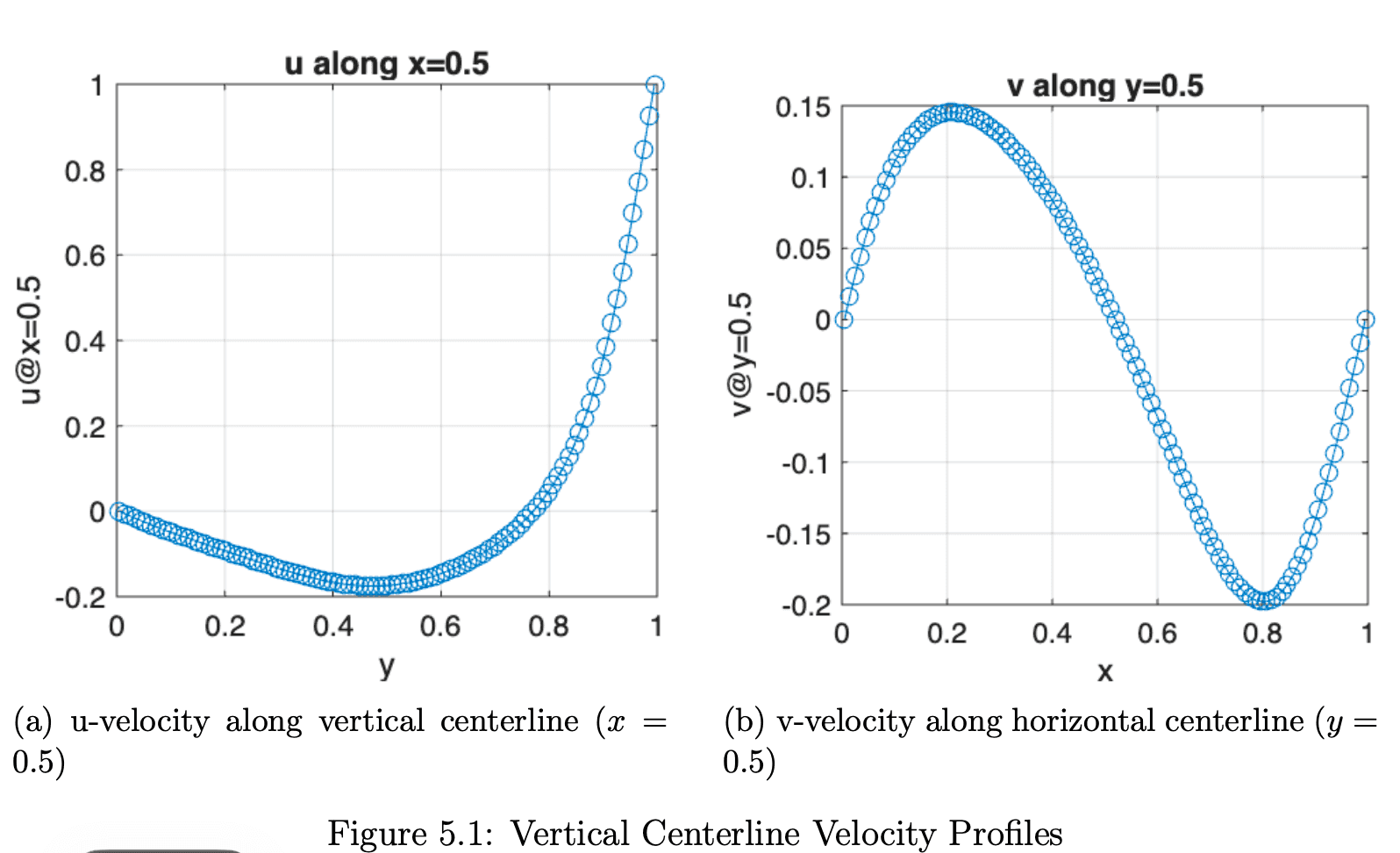
Computational Fluid Dynamics: Lid-Driven Cavity Flow SimulationThe simulation converged to a steady state at Reynolds number 100 on a 101x101 grid, yielding velocity and pressure profiles consistent with…
Computational Fluid Dynamics: Lid-Driven Cavity Flow SimulationThe simulation converged to a steady state at Reynolds number 100 on a 101x101 grid, yielding velocity and pressure profiles consistent with…
Finite Element Simulation of Nacre's Resilient Brick-Mortar MicrostructureDemonstrated that nacre's brick-mortar microstructure effectively suppresses the adverse effects of microstructural randomness, rendering the…
M.Tech, Mechanical Engineering (Specialised in Manufacturing)
Thesis: Development of Digital Twin Product for Manufacturing Industry
#02 · 2025 – 2028
Indian Institute of Management Visakhapatnam
Master of Business Administration (MBA)
Deferred second year to 2027-28 | Score: 83%
#03 · 2021 – 2025
National Institute of Technology Agartala
B.Tech, Production Engineering
Score: 84.4% (Top 10)
Experience
Assigned to the Digital Transformation Department. Projects: NPD Automation, AI integration, Development of Digital Twin for Manufacturing Line
Digital TwinManufacturing SimulationIndustrial AutomationAI IntegrationNew Product Development
o Identified bottlenecks in NPD workflows, causing delays across product development stages
o Implemented project planning and dependency tracking using MS Project in a manufacturing setup
o Structured process plans and tracked milestones across teams to improve coordination
o Reduced cycle time by 15% and improved throughput planning
CChallenge
Bottlenecks in NPD workflows, causing delays across product development stages
AAction
Identified bottlenecks, structured process plans, tracked milestones across teams using MS Project
RResult
Reduced cycle time by 15% and improved throughput planning
MS ProjectProject PlanningDependency TrackingProcess ImprovementManufacturingWorkflow Optimization
o Investigated AM repair strategies for steel components to reduce replacement cost and downtime
o Learned WAAM processes and microstructural analysis through 250+ literature sources
o Developed and tested MS-SS316L graded structures using WAAM.
o Authored a comprehensive first-of-its-kind review paper on metal additive manufacturing. Achieved
40% hardness increase and 10% projected lifecycle cost reduction
CChallenge
Reducing replacement cost and downtime for steel components using additive manufacturing
AAction
Investigated AM repair strategies, learned WAAM processes and microstructural analysis through 250+ literature sources, developed and tested MS-SS316L graded structures using WAAM, and authored a review paper on metal additive manufacturing
RResult
40% hardness increase and 10% projected lifecycle cost reduction
WAAMMicrostructural AnalysisLiterature ReviewAdditive ManufacturingMaterials ScienceMetallurgyResearch and DevelopmentMetal Fabrication
As is the case for every engineering and MBA grad, LinkedIn is a major part of personal branding, and everyone does their best to make that profile as perfect as possible. Now, for those of us old folks who lived before ChatGPT, we know that LinkedIn didn't offer many AI services, which is not at all the case today. Every LinkedIn element comes with an AI offering bundled into the Premium plan, which is fairly priced for an executive but certainly not for a fresher. Which is ironic, as freshers need the platform the most. Now, I was in the same boat, and I thought, there's no way I am paying for premium, so what do I do? I decided I will make my own LinkedIn Premium. I, assisted by AI, built the entire portfolio website, integrated AI across most aspects of the site, and added a careers section that includes AI-driven ATS screening, resume building, and job search.
This is a personal project.
CChallenge
Limited access to AI services on LinkedIn for those who need it most, such as freshers, due to the cost of the Premium plan
AAction
Built a personal portfolio website with AI integration across most aspects of the site, including a careers section with AI-driven ATS screening, resume building, and job search
RResult
Created a personalized alternative to LinkedIn Premium with AI-powered features
Grad school is tough. New environment, harder classes, freedom to choose from hundreds of courses. Naturally, it was kind of confusing for me at first. So, as the first semester ended, I tried to go onto my institute's ERP system to plan my next semester, and to my utter dismay, there were no such tools to do that. So how do students navigate this? As primitive as it may sound, they use pen and paper, or none at all (some do use Excel). So, seeing this vacuum, I decided that if there is no such platform, then I will make one. One whole night, a few cups of coffee, and I finally made the platform.
CChallenge
Lack of tools to plan courses in the institute's ERP system, leading to confusion and primitive methods like pen and paper or Excel being used by students.
AAction
Created a platform, https://www.academic-planner-iitgn.vercel.app, using AI-assisted development.
RResult
A platform was made to fill the vacuum of course planning tools.
This project was done as part of Prof. Dilip Sundaram's CFD course at IITGn. The problem statement involved predicting the fluid flow through a converging-diverging nozzle. A program was developed to solve unsteady, inviscid, compressible fluid flow through a C-D nozzle using an explicit, time-marching MacCormack scheme, and the results were validated against analytical and NASA experimental data.
CChallenge
The primary challenge involved developing a program to accurately simulate unsteady, inviscid, compressible fluid flow through a converging-diverging rocket nozzle, and then computing steady-state flow properties across both isentropic subsonic and subsonic-supersonic flow regimes. This required correctly capturing potential discontinuities and conserving mass, momentum, and energy across the domain, all while maintaining numerical stability and accuracy.
AAction
Engineered a program in MATLAB to simulate quasi-one-dimensional, unsteady, compressible fluid flow through a converging-diverging rocket nozzle by implementing the MacCormack scheme to solve Euler equations. Designed and applied appropriate boundary conditions and a time-marching loop for convergence across two distinct isentropic flow regimes.
RResult
The numerical results for pressure, density, temperature, and Mach number profiles demonstrated strong agreement with analytical solutions and a very close tie to NASA experimental data, validating the model's ability to accurately capture real-world fluid behavior across both isentropic subsonic and subsonic-supersonic flows.
This project was done as part of a summer internship at Tata Steel R&D, Jamshedpur, under the guidance of Mr Kaushal Kishore.
One may wonder, what if we made a part from different materials? What about reparing worn out parts with better materials? But most will say, just replace the worn component, order a new one, and move on. But what if the part is expensive, critical? What if we could just rebuild it layer by layer? These are the questions I tried to address with this graded repair project. This internship experience was perhaps the most exciting of my career (till that point). I got to work and learn from incredible scientists, who made sure I had a rich learning experience. But on the flip side, it also meant 100 hr weeks!
CChallenge
Steel components in harsh-service environments face premature wear, corrosion, and replacement costs. Tata Steel’s objective was to evaluate whether WAAM-based SS316L deposition over mild steel could create a defect-free functionally graded repair solution that improves component life while reducing refurbishment cost.
AAction
Conducted a systematic literature review of 250+ sources to identify research gaps in WAAM-based FGMs, then designed and fabricated MS–SS316L graded structures (200 × 30 × 110 mm) using a 6-axis CMT WAAM robotic system. Performed metallurgical and mechanical characterisation using optical microscopy, SEM, hardness contour mapping, and tensile evaluation, while documenting findings in a 20,000-word technical completion report delivered on time.
RResult
Developed a defect-free hybrid steel repair strategy with strong metallurgical bonding and gradual hardness transition, achieving 40% higher hardness, 20% improvement in tensile strength, and 10% projected cost reduction, demonstrating direct applicability for marine, oil & gas, and heavy industrial asset life-extension programs.
I come from the northeast (Silchar and Agartala), and we were introduced to the concept of malls rather recently. It was only in 2012 that the Goldighi Mall opened its doors in Silchar after a long construction time, followed by the ML Plaza in Agartala in 2013. Interestingly, both had BigBazar as their opening partners and for a long time, the mall was colloquially known as BigBazar. These malls instantly became the heart of their respective towns, attracting massive footfall in the initial days and, to some extent, becoming the envy of local store owners. It is worth noting that these were malls in the true sense, built over a large area, hosting multiple brand outlets (albeit not so high-end), a gaming plaza, a food court, and a cinema complex. The sunshine days for these establishments started to wane about half a decade into their operations. Things were already slowing down, and then the pandemic became the last nail in the coffin. Although neither of them has stopped operations today, their footfall is a shadow of what it was. What were once bustling centres of commerce have almost been abandoned. I observed a similar cycle in Bengaluru and Ahmedabad, and they were much more pronounced. Unlike towns in the northeast, Bengaluru and Ahmedabad are metropolises with malls sprouting on every other corner and every other day. But these new malls stand in contrast to older malls that have shut their doors. Seeing this, a question came to my mind: Why do malls die? What are the most important factors? What is the optimal density of malls for a given population? Establishing and running a mall requires significant investment, and many families' livelihoods depend on it. Hence, this question becomes significant. I have started my investigation, and I hope to have an answer soon. If anyone is interested in contributing to this work, you're welcome to reach out to me.